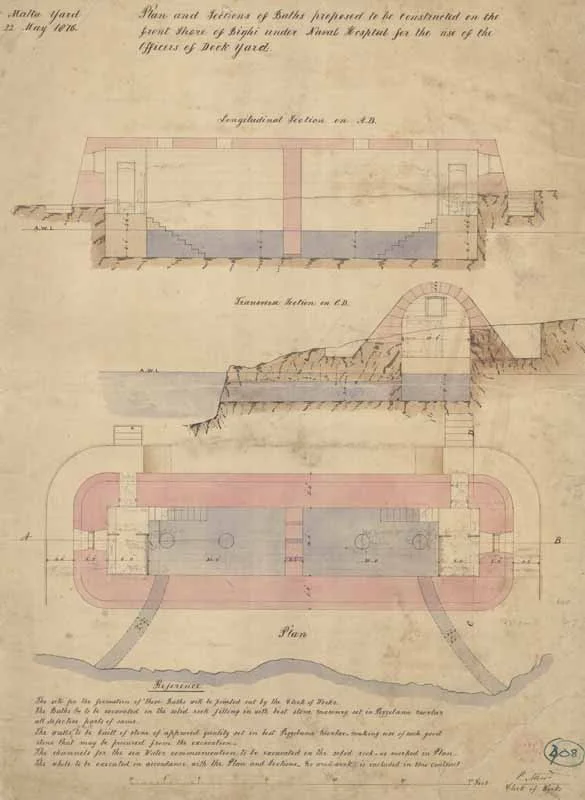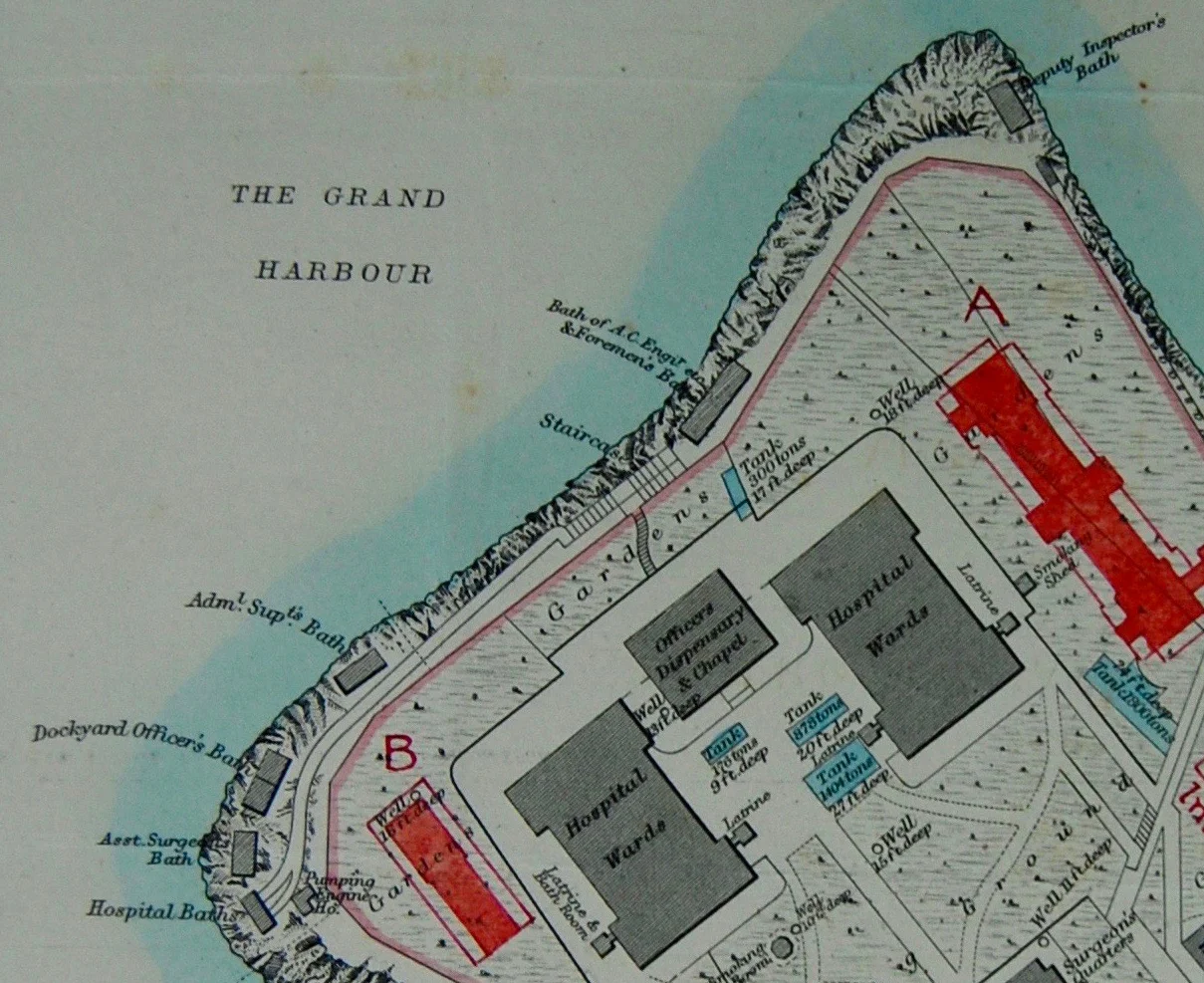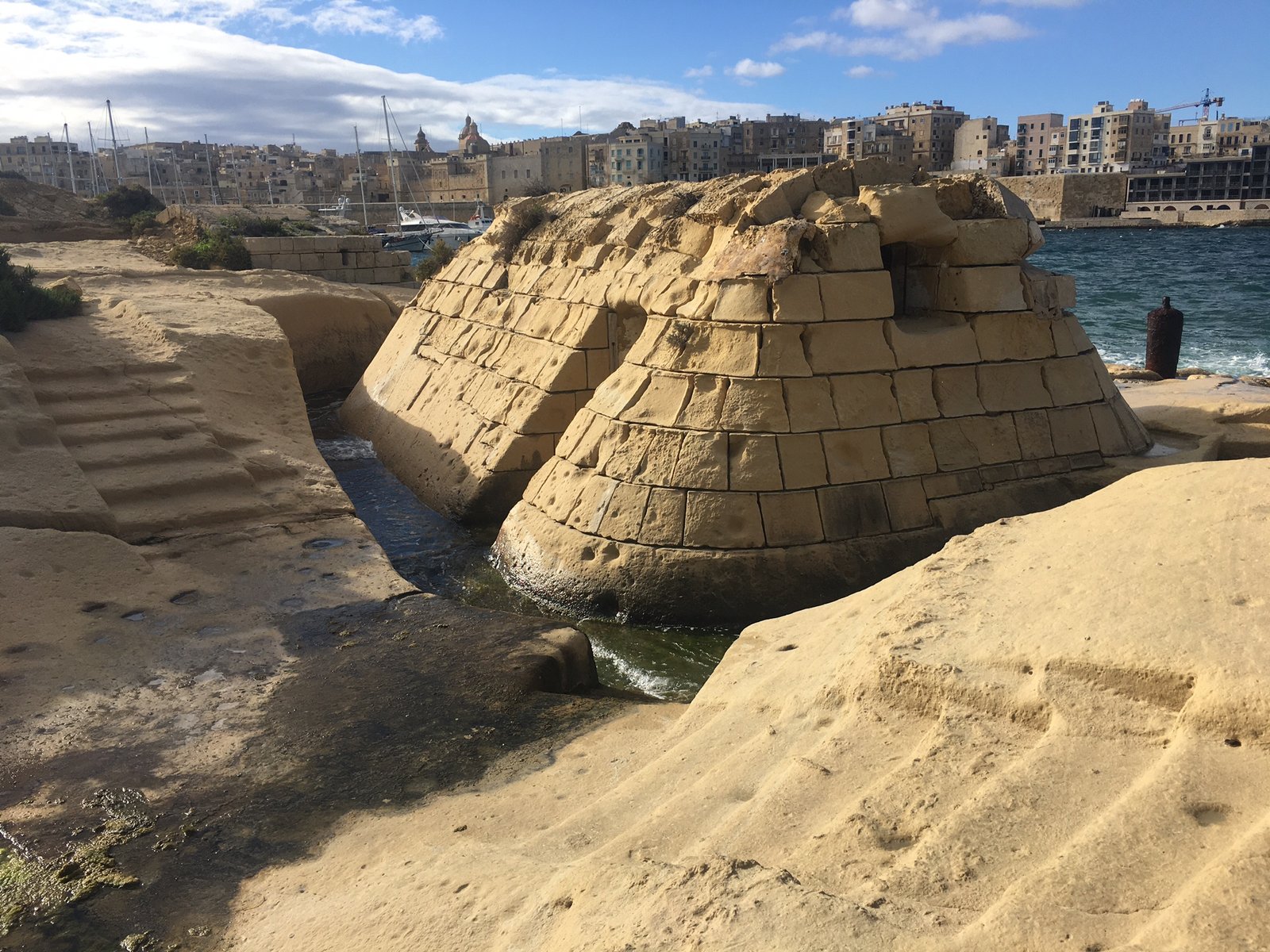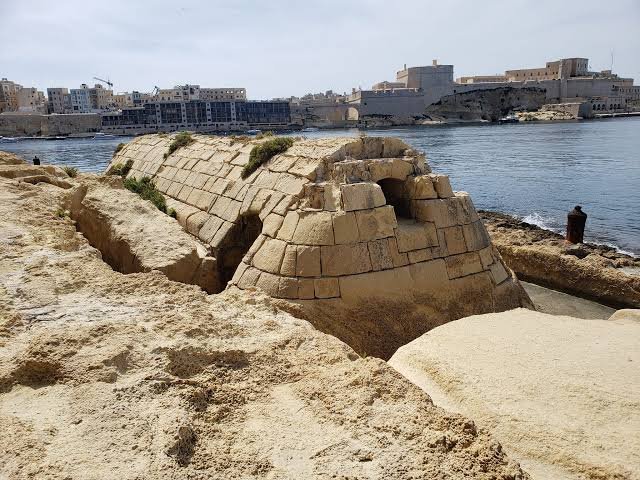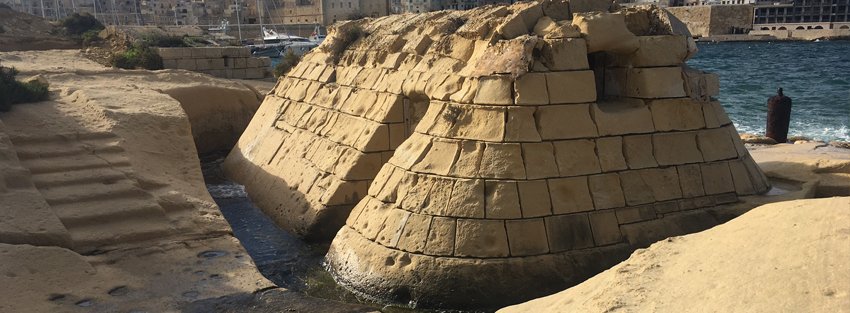


Along the coast beneath the former Bighi Hospital are historic seawater baths dating to at least 1876. Originally six were built, of which four survive today, although most are currently in a deteriorated and unsafe condition.
The baths were intended for dockyard officers, hospital users, and others employed by the British services. They were constructed for health and therapeutic purposes, reflecting the contemporary belief in the beneficial effects of seawater on wounds and other medical conditions.
The chambers were excavated into the rock, with vaulted roofs and walls built using stone obtained during excavation. They were finished with pozzolana mortar, a water-resistant material with cement-like properties. Rock-cut drainage passages connected the baths to the sea, and some of these channels remain visible underwater today.
Steps carved into the rock allowed bathers to enter and leave the baths when filled with seawater. A nearby Pumping House circulated the water, although it has since largely collapsed. The original plans also specifically prohibited the use of timber in their construction.
Today, the floors have been filled and covered with concrete. The baths are intended to form part of the wider restoration of the former Bighi Hospital complex, now occupied by Esplora, with the hope that these important remains will eventually be conserved and restored.